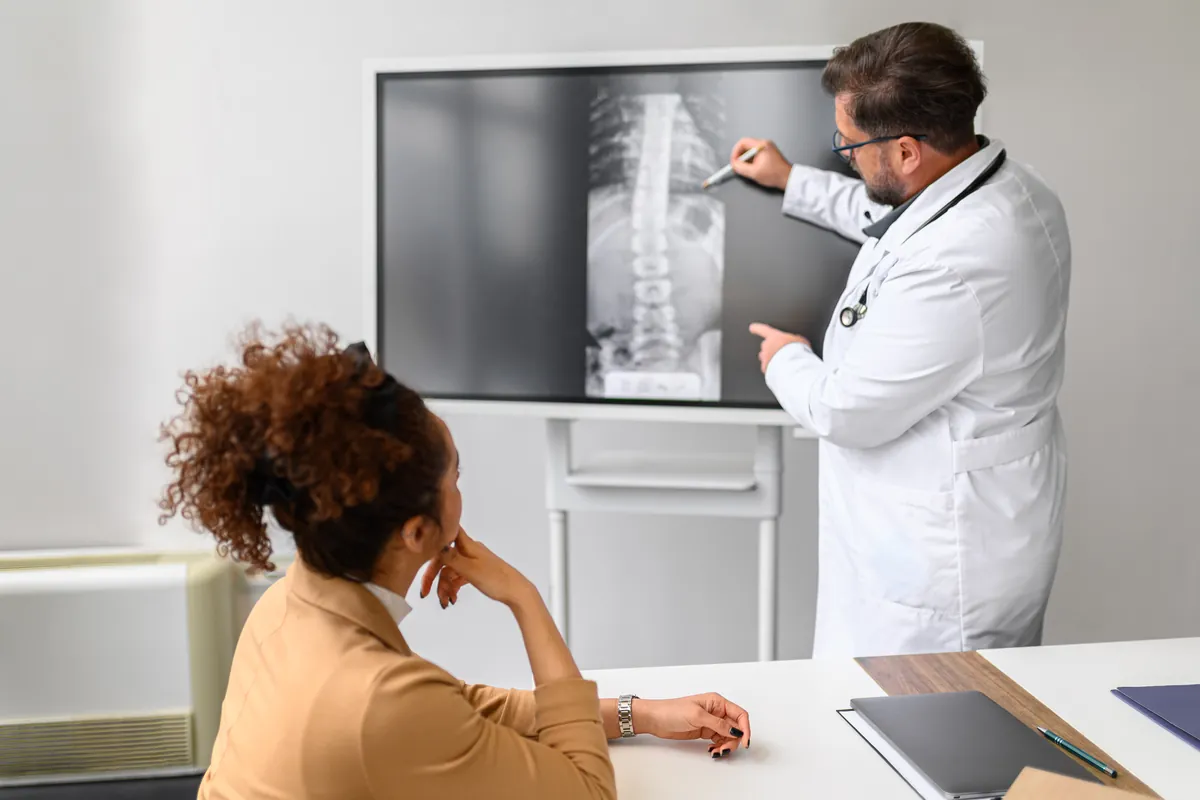
The health of your spine is essential for moving freely, protecting the spinal cord, and maintaining your quality of life. When an infection settles in this system, pain and the risk of neurological damage increase significantly. Two of the most important causes are spinal epidural abscess and lumbar spondylodiscitis, which can progress rapidly if not addressed promptly with clinical care.
In Costa Rica, early evaluation allows for confirmation of the diagnosis and the initiation of effective therapies before complications arise. If you experience persistent back pain with fever, general malaise, or progressive weakness in your legs, immediate consultation with a Neurosurgeon reduces the risk of long-term effects. Specialized care coordinates evidence-based studies and treatments, which are essential to determine whether management should be medical, surgical, or combined. Many people seek accurate guidance about spinal infections to begin the diagnostic process without delay.
Symptoms and Warning Signs
The clinical presentation can vary, but there are clear patterns to look for. Spinal epidural abscess typically causes intense localized pain that worsens with movement or when lying down, and may be accompanied by fever and chills. When the abscess compresses the spinal cord or nerve roots, symptoms such as tingling, loss of strength, changes in sensation, or problems controlling bladder or bowel function may appear. Lumbar spondylodiscitis, on the other hand, usually begins with mechanical low back pain that increases when standing or walking, tenderness when palpating the area, and stiffness, with intermittent fever and fatigue. In both diagnoses, progression without treatment increases the risk of neurological deterioration.
In the presence of severe pain with fever or neurological symptoms, urgent consultation is crucial. Strategically, terms like spinal epidural abscess and lumbar spondylodiscitis appear in search engines when patients need direct information to distinguish common back pain from an infectious condition that requires clinical priority.
- Back pain that does not improve with usual painkillers, especially if it occurs at night or wakes you from sleep.
- Fever, night sweats, or chills associated with focal low back pain.
- Neurological deficit: tingling, weakness in the legs, unsteadiness when walking, loss of sensation, or problems controlling bladder or bowel function.
- Risk factors: diabetes, immunosuppression, recent infection elsewhere in the body, use of catheters, previous surgeries or injections in the back.
Timely Diagnosis in Costa Rica
Diagnosis combines a detailed medical history, neurological examination, and complementary tests. The first step is to identify the duration of pain, presence of fever, risk factors, and the pace of symptom progression. From there, laboratory tests (complete blood count, inflammatory markers such as CRP and ESR) and blood cultures help determine if the origin is bacterial or, less commonly, fungal. Imaging is key to confirming the location, extent of the infection, and possible neural compression.
Contrast-enhanced magnetic resonance imaging is the gold standard for visualizing the epidural space, discs, and vertebrae. In patients with contraindications to contrast or limited access, computed tomography can provide useful information, especially for assessing bone. If needed, image-guided biopsy or aspiration provides the causative microorganism and its sensitivity profile, allowing for precise adjustment of antibiotics and reducing the risk of treatment failure.
- Laboratory studies: complete blood count, C-reactive protein, erythrocyte sedimentation rate, and blood cultures.
- Imaging: contrast-enhanced magnetic resonance imaging; computed tomography when MRI is not possible.
- Image-guided procedures: aspiration or biopsy for culture and sensitivity testing, fundamental for choosing targeted therapy.
An appropriate differential diagnosis rules out other causes of pain such as fragility fractures, vertebral tumors, or herniated discs. This pathway allows for prompt initiation of spinal infection treatment in Costa Rica, setting realistic goals: relieve pain, eliminate the infectious focus, protect neurological function, and restore spinal stability.
Treatment and Recovery: Medical, Surgical, or Combined
The approach depends on clinical stability, the presence of neurological deficits, and response to antibiotics. In cases without spinal cord compression or instability, intravenous antimicrobial therapy guided by cultures is started, typically lasting 6 to 12 weeks depending on clinical evolution and inflammatory markers. Supportive measures are added: pain control with analgesics and anti-inflammatories prescribed by a specialist, hydration, and in some cases temporary immobilization to reduce mechanical load on the affected segment.
Surgery is indicated when there is progressive neurological compression, a large abscess, poor response to medical treatment, spinal instability, or intractable pain. Procedures may include drainage and decompression of the abscess, removal of infected tissue, and, when stability is compromised, fixation or fusion to restore mechanical support. The goal is twofold: eradicate the infection and protect neurological function. After surgery, supervised rehabilitation supports a gradual return to activities, with attention to posture and strengthening of the paraspinal muscles.
Close follow-up is as important as the initial treatment. It is recommended to monitor the evolution of pain, strength, and sensation, along with serial CRP/ESR checks and, when necessary, repeat imaging to confirm resolution. Signs such as recurrent fever, increasing pain, or new neurological symptoms require immediate reassessment to rule out persistent infection or complications.
Prevention reduces relapses and new episodes. Maintaining optimal glucose control in people with diabetes, completing prescribed antibiotic courses, caring for skin hygiene and any intravascular devices, and following postoperative recommendations all reduce the risk of reinfection. In addition, avoiding self-medication with antibiotics without medical indication helps prevent bacterial resistance and future treatment failure.
If you notice warning signs or have persistent low back pain, seek professional evaluation before neurological deficits appear. Contact me for a specialized evaluation and receive clear, safe guidance to decide your next step.